SQShowSquad
CalendarSign inJoin
Cosmos
RELEASED·SERIES·EN

Cosmos

Sun, Mar 9, 2014
  • Documentary
Series · Synopsis

Synopsis

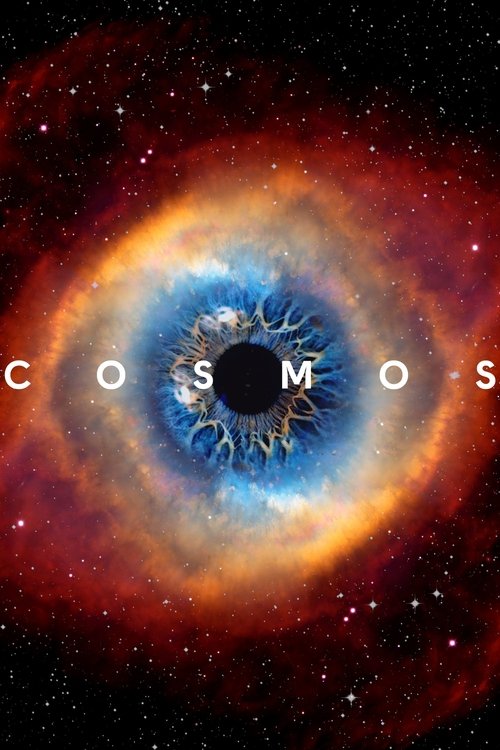
Famed astrophysicist Neil deGrasse Tyson provides clarity for the vision of the cosmos as he voyages across the universe with never-before-told stories that delve into the scientific concepts of the laws of gravity and the origins of space and time.

Trailer

Watch the trailer

Where to watch

Streaming on

  • FOX↗
  • National Geographic↗
Cast

Top of the call sheet

  • Neil deGrasse Tyson
    Neil deGrasse Tyson
    as Self - Host
  • Ann Druyan
    Ann Druyan
    as —
Related

If you’re into this…

  • The Ark
    The Ark
    2023 · series
  • NOVA
    NOVA
    1974 · series
  • Horizon
    Horizon
    1964 · series
  • Mars
    Mars
    2016 · series
  • The Universe
    The Universe
    2007 · series
  • Star Trek: Prodigy
    Star Trek: Prodigy
    2021 · series
  • Cosmos: A Personal Voyage
    Cosmos: A Personal Voyage
    1980 · series
  • Star Trek: Short Treks
    Star Trek: Short Treks
    2018 · series
  • Star Wars Resistance
    Star Wars Resistance
    2018 · series
  • Alien Worlds
    Alien Worlds
    2020 · series
SQShowSquad
CalendarSign inJoin
Episodes

3 seasons · 39 episodes

Ended · 39 aired
Season 1
13 episodes · 13 aired
▾
  • E1
    The Shores of the Cosmic Ocean
    Aired · Mon, Sep 29, 1980 · 60m

    At the beginning of this cosmic journey across space and time, Dr. Carl Sagan takes us to the edge of the universe aboard a spaceship of the imagination. Through beautiful special effects, we witness quasars, exploding galaxies, star clusters, supernovas, and pulsars. Returning to our solar system, we enter a re-creation of the Alexandrian Library, the seat of learning on Earth 2,000 years ago.

  • E2
    One Voice in the Cosmic Fugue
    Aired · Mon, Oct 6, 1980 · 60m

    Dr. Sagan's cosmic calendar makes the history of the universe understandable and frames the origin of the Earth and the evolution of life. We see the evolutionary process unfold, from microbes to humans. Our understanding of how life developed on Earth enables us to venture to other worlds for imaginative speculations on what forms life might take elsewhere.

  • E3
    Harmony of the Worlds
    Aired · Mon, Oct 13, 1980 · 60m

    This episode is a historical re-creation of the life of Johannes Kepler, the last scientific astrologer, the first modern astronomer and the author of the first science fiction novel. Kepler provided insight into how the moon and the planets move in their orbits and, ultimately, how to journey to them. It's also a story about the scientific process of discovery, and how the search for truth is never easy but always worthwhile.

  • E4
    Heaven and Hell
    Aired · Mon, Oct 20, 1980 · 60m

    A descent through the hellish atmosphere of Venus to explore its broiling surface serves as a warning to our world about the possible consequences of the increasing greenhouse effect. Then Dr. Sagan leads us on a tour of our solar system to see how other heavenly bodies have suffered from various cosmic catastrophes.

  • E5
    Blues for a Red Planet
    Aired · Mon, Oct 27, 1980 · 60m

    Is there life on Mars? Dr. Sagan takes viewers on a tour of the red planet first through the eyes of science fiction authors and then through the unblinking eyes of two Viking spacecraft that have sent thousands of pictures of the stunning Martian landscape back to Earth since 1976. Though based on older Mars missions, Sagan's analysis still holds true.

  • E6
    Travelers' Tales
    Aired · Mon, Nov 3, 1980 · 60m

    Dr. Sagan compares the exhilaration of 17th-century Dutch explorers who ventured in sailing ships halfway around our planet in their quest for wealth and knowledge to an inside view of the excitement around Voyager's expeditions to Jupiter and Saturn. The newly acquired treasures of our present golden age of exploration are the focus of this episode.

  • E7
    The Backbone of Night
    Aired · Mon, Nov 10, 1980 · 60m

    Humans once thought the stars were campfires in the sky and the Milky Way "the backbone of night." In this fascinating segment, Dr. Sagan takes us back to ancient Greece, when the basic question "what are the stars?" was first asked. He visits the Brooklyn elementary school of his childhood, where this same question is still on students' minds.

  • E8
    Journeys in Space and Time
    Aired · Mon, Nov 17, 1980 · 60m

    A voyage to see how star patterns change over millions of years is followed by a journey to the planets of other stars, and a look at the possibility of time travel. This takes us to Italy, where a young Albert Einstein first wondered what it would be like to ride on a beam of light.

  • E9
    The Lives of the Stars
    Aired · Mon, Nov 24, 1980 · 60m

    Using computer animation and amazing astronomical art, Dr. Sagan shows how stars are born, live, die, and sometimes collapse to form neutron stars or black holes. We then journey into the future to witness "the last perfect day on Earth," 5 billion years from now, after which the sun will engulf our planet in the fires of its death throes.

  • E10
    The Edge of Forever
    Aired · Mon, Dec 1, 1980 · 60m

    Dr. Sagan leads us on some awesome trips — to a time when galaxies were beginning to form, to India to explore the infinite cycles of Hindu cosmology, and to show how humans of this century discovered the expanding universe and its origin in the big bang. He disappears down a black hole and reappears in New Mexico to show us an array of 17 telescopes probing the farthest reaches of space.

  • E11
    The Persistence of Memory
    Aired · Mon, Dec 8, 1980 · 60m

    The brain is the focus of this fascinating portion of our journey as Dr. Sagan examines another of the intelligent creatures with whom we share the planet Earth — whales. Then we wind through the maze of the human brain to witness the architecture of thought. We see how genes, brains, and books store the information necessary for human survival.

  • E12
    Encyclopedia Galactica
    Aired · Mon, Dec 15, 1980 · 60m

    Are there alien intelligences? How could we communicate with them? What about UFOs? The answers to these questions take us to Egypt to decode ancient hieroglyphics, to the largest radio telescope on Earth, and, in the Spaceship of the Imagination, to visit other civilizations in space. Dr. Sagan answers questions such as: "What is the life span of a planetary civilization?" and "Will we one day hook up with a network of civilizations in the Milky Way galaxy?

  • E13
    Who Speaks for Earth?
    Aired · Mon, Dec 22, 1980 · 60m

    Through the use of special effects, we retrace the 15-billion-year journey from the big bang to the present. We also hear the tragic story of the martyrdom of Hypatia, the woman scientist of ancient Alexandria. This is the famous episode on nuclear war in which Dr. Sagan argues that our responsibility for survival is owed not just to ourselves, but also to the cosmos, ancient and vast, from which we spring.

Season 2
13 episodes · 13 aired
▾
  • E1
    Standing Up in the Milky Way
    Aired · Mon, Mar 10, 2014 · 60m

    The Ship of the Imagination, unfettered by ordinary limits on speed and size, drawn by the music of cosmic harmonies, can take us anywhere in space and time. It has been idling for more than three decades, and yet it has never been overtaken. Its global legacy remains vibrant. Now, it's time once again to set sail for the stars.

  • E2
    Some of the Things That Molecules Do
    Aired · Mon, Mar 17, 2014 · 60m

    Life is transformation. Artificial selection turned the wolf into the shepherd and all the other canine breeds we love today. And over the eons, natural selection has sculpted the exquisitely complex human eye out of a microscopic patch of pigment.

  • E3
    When Knowledge Conquered Fear
    Aired · Mon, Mar 24, 2014 · 60m

    There was a time, not so long ago, when natural events could only be understood as gestures of divine displeasure. We will witness the moment that all changed, but first--The Ship of the Imagination is in the brooding, frigid realm of the Oort Cloud, where a trillion comets wait. Our Ship takes us on a hair-raising ride, chasing a single comet through its million-year plunge towards the Sun.

  • E4
    A Sky Full of Ghosts
    Aired · Mon, Mar 31, 2014 · 60m

    An exploration of how light, time, and gravity combine to distort our perceptions of the universe. We eavesdrop on a series of walks along a beach in the year 1809. William Herschel, whose many discoveries include the insight that telescopes are time machines, tells bedtime stories to his son John, who will grow up to make some rather profound discoveries of his own. A stranger lurks nearby. All three of them figure into the funhouse reality of tricks that light plays with time and gravity.

  • E5
    Hiding in the Light
    Aired · Mon, Apr 7, 2014 · 60m

    The keys to the cosmos have been lying around for us to find all along. Light, itself, holds so many of them, but we never realized they were there until we learned the basic rules of science.

  • E6
    Deeper, Deeper, Deeper Still
    Aired · Mon, Apr 14, 2014 · 60m

    Science casts its Cloak of Visibility over everything, including Neil, himself, to see him as a man composed of his constituent atoms. The Ship of the Imagination takes us on an epic voyage to the bottom of a dewdrop to discover the exotic life forms and violent conflict that's unfolding there. We return to the surface to encounter life's ingenious strategies for sending its ancient message into the future.

  • E7
    The Clean Room
    Aired · Mon, Apr 21, 2014 · 60m

    The little known but heroic story of a guy from Iowa that can't really be told without going all the way back to the time long before the Earth was formed - to the origin of the elements in the hearts of stars. The tempestuous youth of the Earth effectively erased all traces of its beginnings. How did we ever learn its true age?

  • E8
    Sisters of the Sun
    Aired · Mon, Apr 28, 2014 · 60m

    The constellation of the Pleiades provides a vehicle for us to explore a series of paradoxes and epochal discoveries for humanity. The untold story of the modern "sisters of the sun," the early 20th century female astronomers, led by two deaf women, at Harvard who catalogued the stars. It's also the story of the young British woman who joined forces with them, her defiance of the world's leading expert, and how she taught the world what the stars are really made of.

  • E9
    The Lost Worlds of Planet Earth
    Aired · Mon, May 5, 2014 · 60m

    The past is another planet - many, actually - and we will bring several of them back to life and ride the Ship of the Imagination to a vision of the Earth a quarter of a billion years into the future. Join us on a journey through space and time to grasp how the autobiography of the Earth is written in its atoms, its oceans, its continents, and all living things.

  • E10
    The Electric Boy
    Aired · Mon, May 12, 2014 · 60m

    Our world of high technology and instantaneous electronic communication with each other and with our robotic emissaries at the solar system's frontier is demystified through the inspiring life story of the man whose genius Albert Einstein revered. Michael Faraday, a child of 19th century poverty, someone from whom nothing much was expected, inventor of the motor and the generator, a lifelong fundamentalist Christian, he is the bridge to the world of smartphones, tablets and so much else.

  • E11
    The Immortals
    Aired · Mon, May 19, 2014 · 60m

    Life itself sends its own messages across billions of years. It is written within us, in our DNA. But will we survive the damage caused by our global civilization? Neil shares a hopeful vision of what our future could be if we take our scientific knowledge to heart.

  • E12
    The World Set Free
    Aired · Mon, Jun 2, 2014 · 60m

    Our journey begins with a trip to another world and time, an idyllic beach during the last perfect day on the planet Venus, right before a runaway greenhouse effect wreaks havoc on the planet, boiling the oceans and turning the skies a sickening yellow. We then trace the surprisingly lengthy history of our awareness of global warming and alternative energy sources, taking the Ship of the Imagination to intervene at some critical points in time.

  • E13
    Unafraid of the Dark
    Aired · Mon, Jun 9, 2014 · 60m

    We know less now about the universe than educated Europeans did before the discovery of the Americas. All those billions of galaxies, all those stars, planets and moons--they amount to a meager 4 per cent of what really awaits out there. This awareness is the humility that distinguishes science from other human activities. It savors the fact that even bigger mysteries, mysteries like dark energy, await us.

Season 3
13 episodes · 13 aired
▾
  • E1
    Ladders to the Stars
    Aired · Tue, Mar 10, 2020 · 60m

    Viewers are invited on an adventure spanning billions of years into the evolution of life and consciousness. Visit a 100,000-year-old laboratory, and examine the story of the change in lifestyle that radically altered human existence and the life of the heretic who found God in the book of nature, which opened our way to the stars.

  • E2
    The Fleeting Grace of the Habitable Zone
    Aired · Tue, Mar 10, 2020 · 60m

    There is no refuge from change in the cosmos. There will come a time in the life of the sun when Earth will no longer be a home for us. Explore the story of our ancestors who rose to a comparable challenge, as well as a long-term vision of our future on other worlds.

  • E3
    Lost City of Life
    Aired · Tue, Mar 17, 2020 · 60m

    Discover a new vision of genesis at the bottom of the blood-red sea of the infant Earth and the story of Victor Goldschmidt, the man who found the first clues to life's beginnings in a green jewel called olivine. As he searched for the origins of life, he risked his own, daring to toy with his Nazi tormentors.

  • E4
    Vavilov
    Aired · Tue, Mar 17, 2020 · 60m

    In the first half of the 20th century, pioneering geneticist Nikolai Vavilov traveled five continents to assemble a treasury of the world's seeds. He dreamed that science could be the means to end hunger, and his refusal to tell a scientific lie cost him his life. Witness the heroism of his colleagues and its direct impact on our lives in one of the most stirring stories in the history of science.

  • E5
    The Cosmic Connectome
    Aired · Tue, Mar 24, 2020 · 60m

    Embark on a voyage of discovery through the evolution of consciousness with stops in ancient Greece and a visit to the largest life form on Earth. This journey takes us into the poignant dream of an abandoned orphan who opened the way to our understanding of the architecture of thought and introduced a vision of a galactic network of thought.

  • E6
    The Man of a Trillion Worlds
    Aired · Tue, Mar 24, 2020 · 60m

    A child lies on the rug of a tenement, dreaming of interstellar adventures. At the dawn of the space age, a young Carl Sagan's career is forged in the clash of his mentors: two scientific titans, astronomer Gerard Kuiper and chemist Harold Urey. Sagan goes on to realize his childhood dreams, carrying their research forward and communicating its significance to the whole world.

  • E7
    The Search for Intelligent Life on Earth
    Aired · Tue, Mar 31, 2020 · 60m

    A hidden underground network — a collaboration of four kingdoms of life — is revealed. Explore a true first-contact story between humans and beings who communicate with a symbolic language and have maintained a representative democracy for tens of millions of years.

  • E8
    The Sacrifice of Cassini
    Aired · Tue, Mar 31, 2020 · 60m

    A mysterious untold story is brought to life: a scientist figures out how to go to the Moon while fighting for his life in a World War I trench. He wrote a letter addressed to readers 50 years in the future, making the Apollo Mission possible. Witness the 20-year-long odyssey of a robotic explorer ordered to self-destruct on another world.

  • E9
    Magic Without Lies
    Aired · Tue, Apr 7, 2020 · 60m

    In the counterintuitive realm of quantum mechanics, light can be two contradictory things (a wave and a particle), and somehow — no one knows how — an unseen observer can alter the nature of reality. Meet Thomas Young, the man who stumbled upon this hole in reality and the still-unfolding technological revolution it made possible.

  • E10
    A Tale of Two Atoms
    Aired · Tue, Apr 7, 2020 · 60m

    Two atoms (carbon and uranium) from different parts of the universe meet on a small planet. Examine how a deadly embrace between science and state altered the fate of the world, and behold a gripping cautionary tale of others who grew used to living in the shadow of grave danger until it killed them all… except for one.

  • E11
    Shadows of Forgotten Ancestors
    Aired · Tue, Apr 14, 2020 · 60m

    From the birth of the devil in ancient Persia, where a beloved family dog becomes a seething beast, to a searing story of saintliness among macaque monkeys, join an exploration into the human potential for change. One of history's greatest monsters is transformed into one of its shining lights.

  • E12
    Coming of Age in the Anthropocene
    Aired · Tue, Apr 14, 2020 · 60m

    In what kind of world can a child born in 2020 expect to grow up? When did our slide into planetwide environmental destruction begin? Enter the possible world that awaits a 2020 baby in her twenties: one darkened by our refusal to confront the real and mounting challenges we face but one which still offers a message of hope.

  • E13
    Seven Wonders of the New World
    Aired · Tue, Apr 21, 2020 · 60m

    Young Carl Sagan and Neil deGrasse Tyson first discovered their passion for science at the New York World's Fairs of the past. Visit the dazzling pavilions of the 2039 New York World's Fair, where problems currently considered intractable may have been solved through public commitment and scientific imagination. A child's journey comes full circle, presenting a future bright with possibilities.