SQShowSquad
CalendarSign inJoin
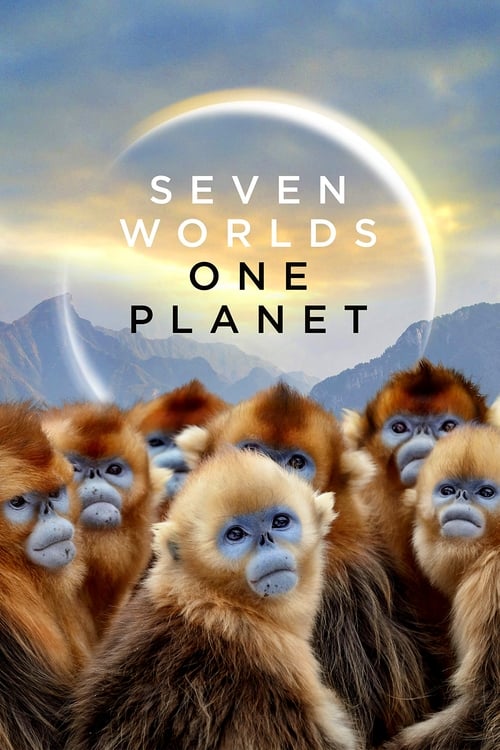
Seven Worlds, One Planet
RELEASED·SERIES·EN

Seven Worlds, One Planet

Sun, Oct 27, 2019
  • Documentary
  • Family
Series · Synopsis

Synopsis

Millions of years ago, incredible forces ripped apart the Earth’s crust creating seven extraordinary continents. This documentary series reveals how each distinct continent has shaped the unique animal life found there.

Trailer

Watch the trailer

Where to watch

Streaming on

  • HBO Max↗
  • HBO Max Amazon Channel↗
  • Discovery+ Amazon Channel↗
  • Discovery +↗
  • Planet Earth Amazon Channel↗
Cast

Top of the call sheet

  • David Attenborough
    David Attenborough
    as Self - Narrator (voice)
Related
If you’re into this…

  • Natural World
    Natural World
    1983 · series
  • Planet Earth III
    Planet Earth III
    2023 · series
  • Nature
    Nature
    1982 · series
  • Life
    Life
    2009 · series
  • Our Planet
    Our Planet
    2019 · series
  • Planet Earth
    Planet Earth
    2006 · series
  • Tiny World
    Tiny World
    2020 · series
  • Planet Earth II
    Planet Earth II
    2016 · series
  • Earth at Night in Colour
    Earth at Night in Colour
    2020 · series
  • Attenborough's Life in Colour
    Attenborough's Life in Colour
    2021 · series
SQShowSquad
CalendarSign inJoin
Episodes

1 season · 7 episodes

Ended · 7 aired
Season 1
7 episodes · 7 aired
▾
  • E1
    Antarctica
    Aired · Sun, Oct 27, 2019 · 58m

    Episode one takes us to Antarctica - the coldest, windiest, most hostile continent. Only the toughest can survive here. From Weddell seals that grind back the ice with their teeth, to colourful starfish carpeting the seabed beneath the ice; huge colonies of king penguins crowd any ice-free land, and four-tonne elephant seals fight for territory on the beach. Life comes here because the ocean that surrounds the continent is incredibly rich. Thousands of penguins, seals, albatross, and over a hundred great whales feast on krill baitballs. However, the ocean here is warming - and with that comes an uncertain future.

  • E2
    Asia
    Aired · Sun, Nov 3, 2019 · 58m

    Asia is the largest and most extreme continent on our planet, stretching from the Arctic Circle in the north to the tropical forests on the equator. The animals here face the hottest deserts, tallest jungles and highest mountains found anywhere on Earth. But the continent has not always looked like this. These extreme worlds were created when India collided with the rest of Asia 30 million years ago, shaping the continent as we know it today. Animals here have adapted to the extreme environments in almost unbelievable ways.

  • E3
    South America
    Aired · Sun, Nov 10, 2019 · 58m

    South America - the most species rich continent on Earth.From the volcanoes of the Andes to the Amazon, the world's largest rainforest, animals here must specialise if they are to carve out a niche.In Patagonia, a puma mother draws on a lifetime's experience to catch prey three times her weight. In the cloud forest, rarely seen Andean bears clamber 30 metres into the canopy to find elusive fruit.Poison dart frogs use ingenious methods to keep their tadpoles safe, whilst anacondas stalk capuchin monkeys. At Igauzu Falls, swifts make death-defying flights through one of the biggest waterfalls on Earth.

  • E4
    Australia
    Aired · Sun, Nov 17, 2019 · 58m

    Australia: a land cast adrift at the time of the dinosaurs.Isolated for millions of years, the weird and wonderful animals marooned here are like nowhere else on Earth. In its jungles a cassowary - one of the most dangerous birds in the world - stands six feet tall.Inland, kangaroos and wombats brave snowstorms, and gum tree forests are filled with never-before-seen predators. In its red desert heart, reptiles drink through their skin and huge flocks of wild budgerigars swirl in search of water. On secret islands Tasmanian devils roam, and offshore thousands of sharks gather for a rare event.

  • E5
    Europe
    Aired · Sun, Nov 24, 2019 · 58m

    Europe - this crowded continent hides the most surprising animals in pockets of wilderness. Above Gibraltar, Europe's only primate lives a life of kidnapping and high drama, whilst in Vienna churchyard-dwelling European hamsters do battle with each other to feast on flowers and candle wax left at graves. Come nightfall, mountain villages in Italy's Apennine Mountains are the hunting grounds for rarely seen wolves, whilst Iberian lynx lurk in the forests of Spain. On the surface of the River Danube, voracious Great white pelicans rob great cormorants for their catches of fish. Deep underground in Slovenia's caves, the Olm - a species of salamander once thought to be baby dragons - live for up to a hundred years, while every summer, Hungary's Tisza River is host to a miraculous display of a giant mayfly's fleeting life cycle.On the surface, Europe has been developed beyond recognition, yet human intervention means the Iberian lynx may yet recover; once on the brink of extinction, a combination of nature reserves and captive breeding programs means that 2019 was a highly successful year for the species, which numbers at over 700 individuals, compared to less than 200 in 2005.

  • E6
    North America
    Aired · Sun, Dec 1, 2019 · 58m

    North America: no continent experiences seasonal change as extreme as North America.From tornados that roar across the prairies, to Arctic air sweeping through the humid, southern swamps, this is a land where pioneering animals thrive.In winter, lynx prowl the snowy Yukon for snowshoe hares, whilst Florida manatees seek hot springs to escape the freeze. In the creeks of Tennessee, fish build spectacular underwater pyramids to find a mate. Fireflies light up the forests during summer nights, roadrunners cruise the spectacular deserts of Arizona, and polar bears leap from rocks to hunt beluga whales.

  • E7
    Africa
    Aired · Sun, Dec 8, 2019 · 58m

    Africa - home to the greatest wildlife gatherings on earth. But even in this land of plenty, wildlife faces huge challenges. At its heart is a vast tropical rainforest full of life. Here young chimpanzees learn how to use tools to make the most of the jungles riches. With knowledge passed down from generation to generation, they can access the best forest foods.Rivalling the jungle for it sheer abundance of life is Africa's Great Rift Valley. It formed 30 million years ago when a mass of molten rock forced the land upwards, eventually tearing the planet's crust apart. As the valley deepened, rivers flooded the valley floor creating stunning lakes. These are the richest freshwater habitats on the planet.Africa's rich Serengeti grasslands are home to the greatest herds of antelopes, wildebeest and zebras. Close behind them are their predators. To increase their chances of a successful kill a group of five cheetahs team up to form one of the largest cheetah coalitions ever seen. But numbers aren't always enough.Covering one third of the continent, Africa's deserts are tough environments for wildlife. In the Namib, the oldest desert on Earth, brown hyenas make epic journeys in search of food for their families and seek shelter in long-abandoned ghost towns. Meanwhile, in the Kalahari the bizarre-looking aardvark digs deep to find a meal.For millennia, Africa's unique wildlife has managed to thrive, even in its most hostile corners, but today its greatest threat comes from human activity. In the last century, millions of elephants have been killed by hunters and poachers, and the desire for northern white rhino horn has brought the sub-species to the brink of extinction.But with help, wildlife populations can recover. In the Virunga mountains, dedicated conservation efforts have meant mountain gorilla numbers have increased above 1000 for the first time since records began. The decisions we make now will decide the future of animals, humanity and all life on earth.