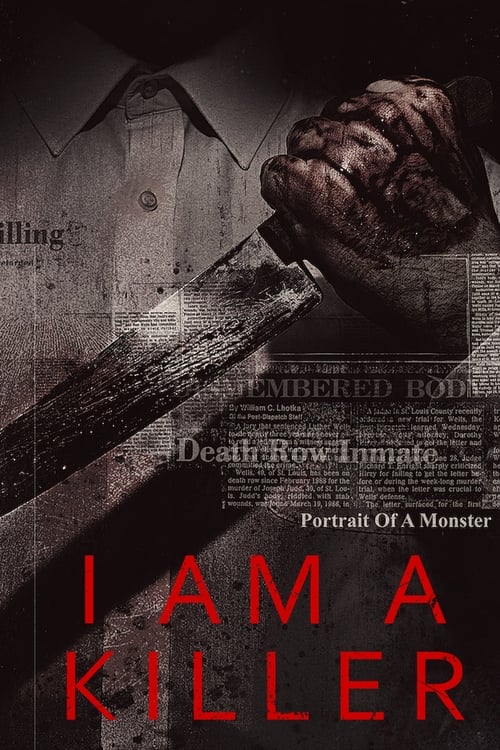
Death row inmates convicted of capital murder give a firsthand account of their crimes in this documentary series.
Lifelong criminal James Robertson reflects on his crimes, life behind bars, and the radical decision he made that sent him to death row.
Convicted murderer Kenneth Foster recounts the shocking events that led to him being placed on death row in Texas.
A robbery gone wrong or a deliberate execution? In his own words, convicted murderer Justin Dickens discusses his crimes.
At 17 years old, Miguel Martinez became the youngest person to be sent to Texas's death row. Here, he shares his sombre story.
From death row in Texas, Charles Thompson tells his story of a crime of passion that ended in a double murder conviction.
While burgling a house in Lufkin, Texas, David Lewis shot dead the 74-year-old homeowner. Here, he tells his story from death row.
In 2002, Deandre Buchanan was convicted of a triple homicide and, despite claiming he had a psychotic episode, he remains on death row.
After confessing to the killings of two men in 1990, Robert Shafer tells his macabre story from behind bars.
In 1995, 18-year-old Joshua Nelson and 16-year-old Keith Brennan were charged with murder. Here, Nelson tells his side of the story.
In 1997 Wayne Doty shot his colleague five times before killing again 14 years later. He tells his story from death row in Florida.
One of the small number of women who commit murder, Lindsay Haugen claims that she strangled her depressed boyfriend in 2015 as an act of mercy.
In 1996, David Barnett murdered his adoptive grandparents, stabbing them over 20 times. Later, he revealed years of abuse at the hands of his father.
Remorseful about the crime that sent him to prison for life, Leo Little tells the story of the murder he committed in 1998. He is now a minister.
From a woman's reformatory in Ohio, Linda Lee Couch talks about the murder of her husband, Walter, in 1984, a killing precipitated by years of abuse.
Mark Arthur maintains that he murdered a friend's father on a Houston highway for savagely beating his wife. But police have a different theory.
After 24 years of death row, Joseph Murphy saw his sentence commuted a week before his execution due to the extreme abuse he sufffered as a child.
After an unsuccessful attempt to kill his father, drug user Charles "Billy" Armentrout later murdered his grandmother and was sent to prison for life.
Kansas native Cavona Flenoy agreed to a date with a liquor store clerk, but the evening took a deadly turn when he tried to assault her.
At a New Year's Eve party in 1996, Brandon Hutchison killed two brothers, a crime he admits -- but there are conflicting versions of the story.
Toby Williams murdered Deborah Moore and shot her husband, John, in a cruel 1984 robbery for which he has been on death row for nearly 35 years.
Subjected to abuse throughout her life, Victoria Smith confessed to killing her husband. But someone close to the case has doubts about her admission.
On death row for murder, Deryl Madison reflects on his struggles with mental illness and finds support from an anti-capital punishment advocate.
Daniel Paulsrud says his fatal shooting of partner Leslie was an accident. But accounts from her family — and his handwritten notes — raise doubts.
James Walker claims he has no recollection of the 2001 murder he confessed to committing. An investigation into his traumatic past offers more context.
Accept a plea deal or go to trial? Three men receive radically different prison sentences for their roles in the fatal shooting of a cab driver.
David Cameron Keith recalls the day he took a young hostage before heading to an airport and killing the pilot who volunteered to take the child's place.
A murderer recounts the crime that ended one life and ruined his own. Those affected, including a police officer and the victim's family, also speak.
In prison for killing her husband, a woman details her past abuse and her turbulent marriage. Her mother also reflects on their strained relationship.
Years after leaving the military, Toby Gregory claims his service and PTSD caused him to murder his wife, Inez. But Inez's family believes otherwise.
Enraged over his rebellious daughter's choice in men, an extremist father enlists his son in a terrifying plot of intimidation and murder.
Sentenced to life without parole for Jason Johnson's horrific murder, Gary Black says he has no regrets, while Jason's family finds purpose in tragedy.
After fatally shooting a coworker, Thomas "TJ" Schifferns maintains his innocence. But details surrounding the crime suggest TJ had a motive.
By helping his fellow inmates, Jamel Hatcher feels he's turned his life around — but not everyone believes his rehabilitation is genuine.
Young love takes a dark turn when Ashley Morrison's plan to run away with her boyfriend, Christian Sims, results in the murder of his grandmother.
Higinio Gonzalez killed a store clerk during an armed robbery at the age of 16. He swears it was an accident, but one county attorney isn't so sure.
Ezdeth Highley reflects on her murder conviction, her transition while being incarcerated and what she's learned during her ongoing 60-year sentence.
Convicted for killing his grandmother, Rex Groves insists he no longer holds murderous thoughts towards his family. But their trust isn't easily won
Makueeyapee Whitford claims the murder he committed was an act of self-defense against a rival tribe, but eyewitness testimonies tell a different story.
A botched drug deal is only the beginning when Candie Dominguez assists her boyfriend, Daniel Lopez, in his gruesome killing of her cousin.
As Daniel maintains his innocence, more details about Jose Menchaca's murder come to light, shifting the focus to Candie's troubled past and cartel ties.
Serving 20 years in prison for a bar brawl gone awry, Walter Triplett maintains that racial profiling played the biggest factor in his conviction.
When threatening messages escalate into an assault that leaves one teen dead and another severely injured, Kimberly Dunkin reflects on her involvement.
Leroy Schmitz claims he didn't mean to kill his wife during a drunken argument, pleading that an abusive childhood predisposed him to violence.
Sentenced to a minimum of 109 years behind bars, Kevin Saxon considers the choices that led him to commit murder — both in and outside of prison.